Making your own pesto with fresh basil will always trump store-bought versions. This sauce originated in Genoa and as with most Italian dishes, shines in its simplicity. The traditional method using a mortar and pestle yields a creamy consistency. Alternatively, if you’re in a rush, you can whizz up a quick but completely different version in your food processor. If you’ve got the time, definitely give the traditional method a try!
Serves 2 (can be doubled)
Prep and cooking time: 2-3 minutes (food processor method), 10-15 minutes (traditional method)
Ingredients:
- pinch of salt
- 2-3 handfuls of basil leaves
- 1-2 cloves of garlic, finely sliced
- 1 handful of finely grated parmesan
- 1 handful of pine nuts
- good quality extra virgin olive oil, to your liking (as a general rule, the less the better – to get more basil flavour rather than than olive oil)
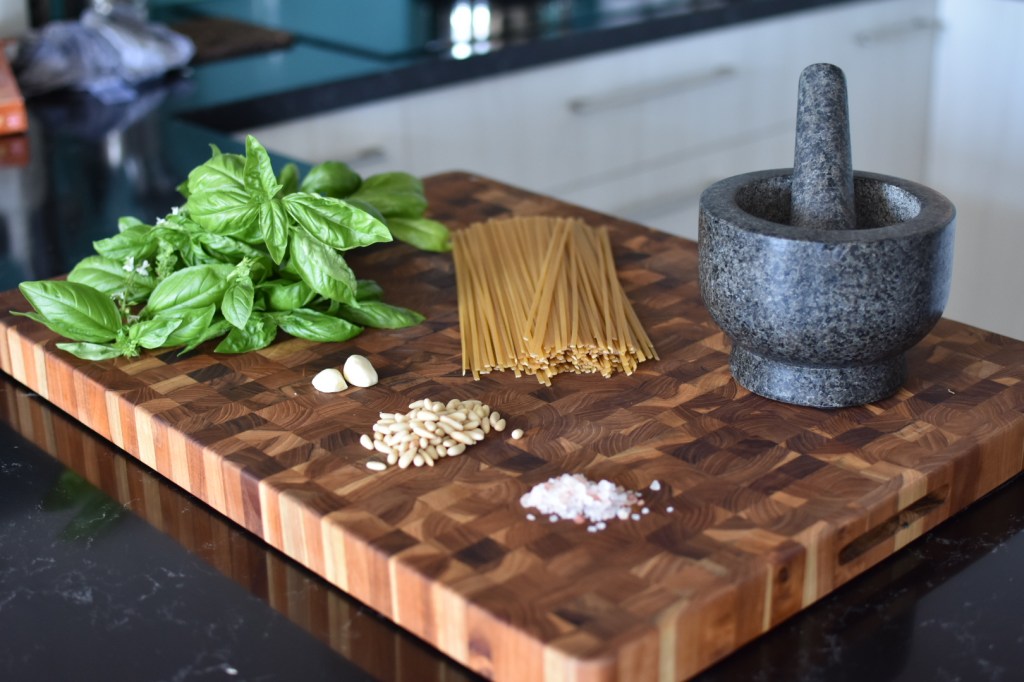
Traditional Method:
- In a mortar and pestle add the salt and garlic. Using a circular motion slowly incorporate the salt with the garlic to form a paste.
- Once this has been achieved, add the pine nuts and again, work in circular motions to turn it into a thick “cream”.
- At this point add a handful of basil leaves, and combine. Repeat two more times with the rest of the basil.
- Add the parmesan cheese and combine to form a pale green paste.
- At this point drizzle in some olive oil while continuing to mix the paste to achieve your preferred consistency.
- If preparing in advance, transfer to a small bowl and cover with lightly oiled plastic film, ensuring it touches the surface of your pesto to prevent oxidation. This can be kept in the fridge until use (but is best fresh).
- To serve, combine with freshly boiled pasta and a few splashes of pasta water to help your pesto coat the pasta better.
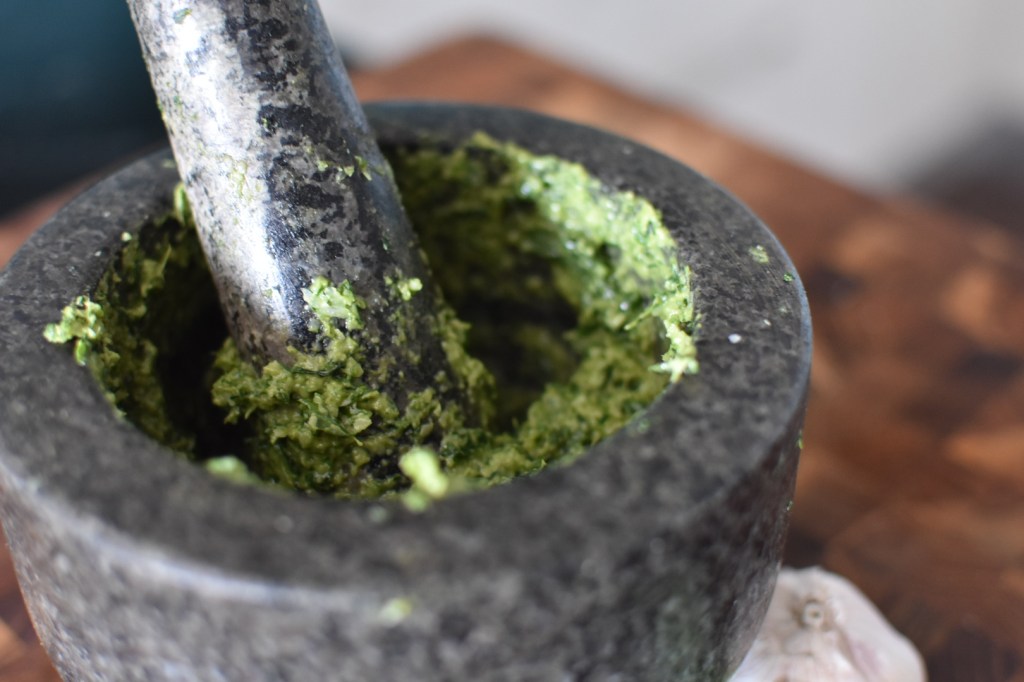
Work in progress 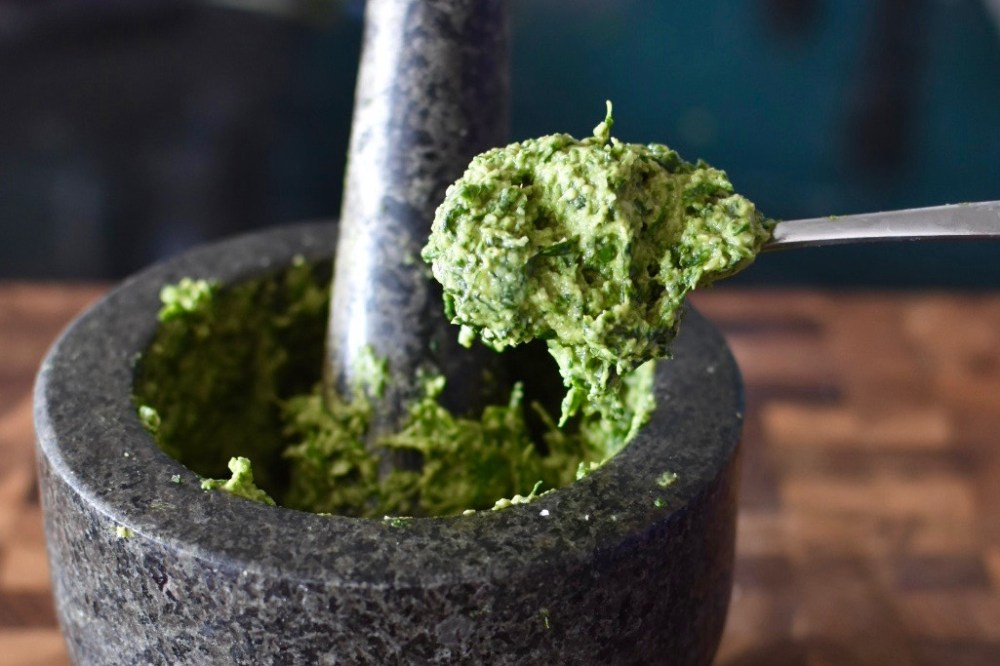
Pesto “cream”
Fast Modern Method (using a food processor)
- Place your pine nuts in a dry pan over a medium heat and toast for 1-2 minutes. Transfer to a plate and allow to cool.
- In a food processor, add the garlic, parmesan and pine nuts and blitz in pulses until combined.
- Add the basil leaves, and set on your blender to a low speed. Add a gentle stream of olive oil while blending to achieve your preferred consistency.
- Season with salt.
- If preparing in advance, transfer to a small bowl and cover with some more olive oil. This can then be kept in a sealed container in the fridge until use.
- To serve, combine with freshly boiled pasta.
Notes:
For the best results I recommend using only basil leaves rather than the whole bunch, and the younger the plant the better. Will using the stems or older leaves ruin your pesto? No, but it might taste slightly more bitter. Still, it’ll be far better than any store-bought stuff!
The main difference between the two methods is the transfer of heat to the basil leaves. When you use a food processor, the blade heats up due to friction, and ”cooks” the basil, making it lose some of its freshness. In the traditional method, you work through the basil leaves in a gentler way that prevents a build-up of heat.
If you’re using the food processor, I recommend adding the basil separately at a later stage to the blender rather than just dumping it all in at once. As explained above, this will help preserve the freshness of the basil better. Likewise, if you opt to use the traditional method, make sure to use a gentle circular motion throughout. Imagine you are trying to smear the pesto along the sides of your mortar rather then just bashing the hell out of it!
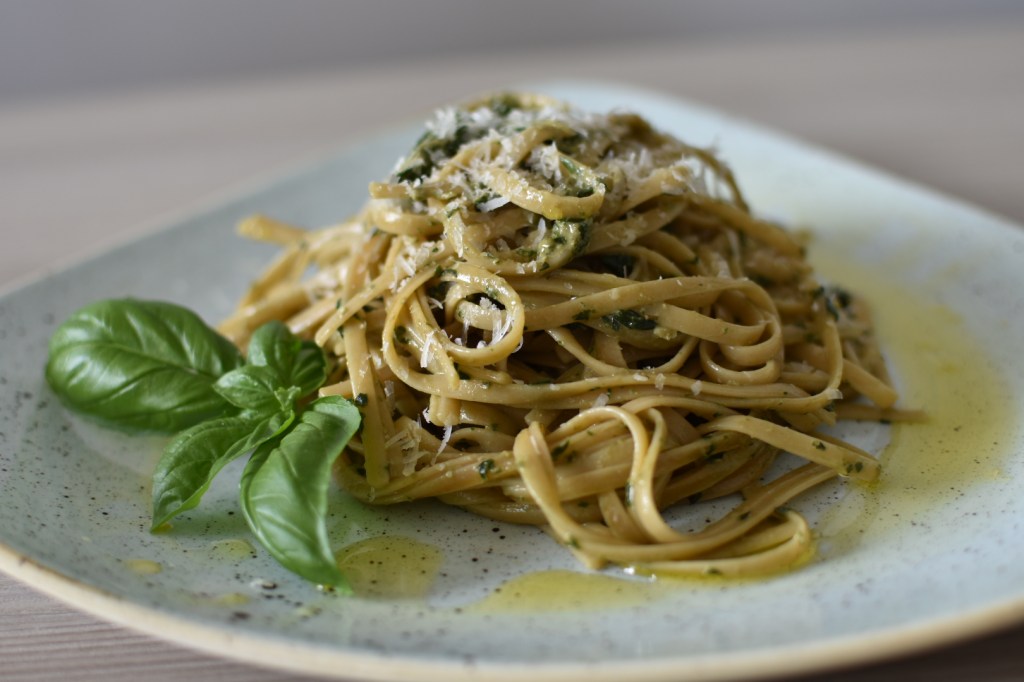
 Food by Zac