Cacio e Pepe. Literally translates to “cheese and pepper”. Now let’s be clear, I’m not Italian, and do not claim that this is the perfect traditional method. This is my own take on this simple dish, with tips of how to achieve a truly delicious humble plate of pasta with minimal fuss. As there’s not a lot of ingredients, the magic is all in the technique. Make sure you read through the notes section in this one! I’ll be with you every step of the way 🙂
Servings: 2 portions (can easily be doubled)
Prep time: 1 minute!
Cooking: about 20 minutes in total
Ingredients:
- 40 g of super finely grated pecorino (good quality)
- 30 g of super finely grated parmigiano (good quality)
- 1-1.25 teaspoons of whole pepper corns
- 250 g of bucatini (the traditional method calls for tornarelli, but any thick variety of spaghetti would do fine)
- Sea salt
Items you will need:
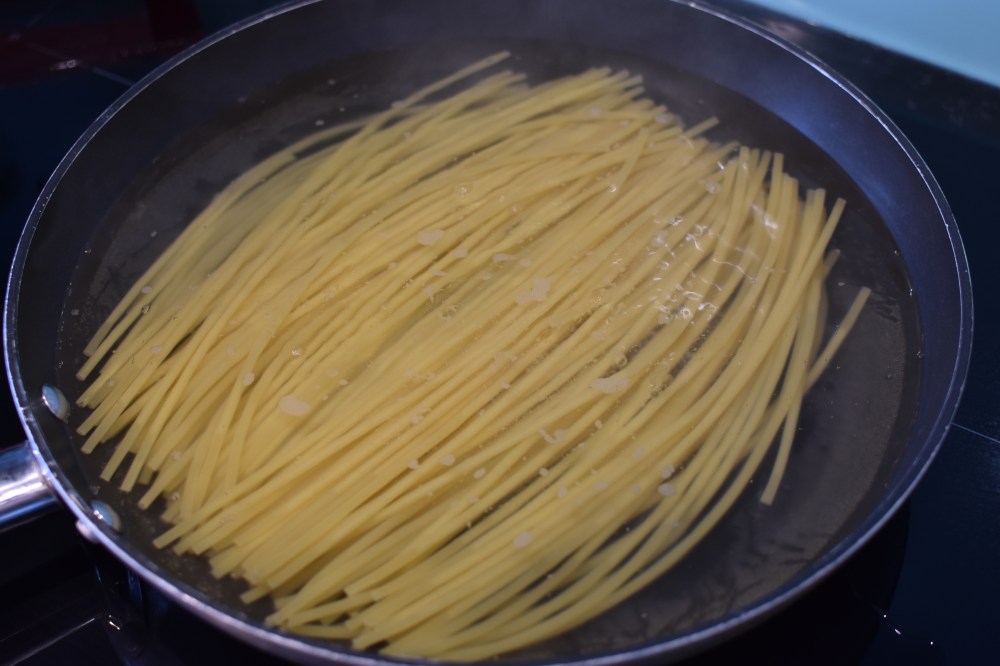
- a “wide” large diameter saucepan or frying pan (that your pasta of choice can fit in lying flat – see image below) NB: if you don’t have one big enough, don’t worry! – I’ll explain in the notes section on how to get around this.
- a small frying pan
- a mortar and pestle (or anything that can crush some pepper corns eg: the back of a heavy saucepan and a chopping board!)
- a large bowl
- 2 plates, ideally warmed for serving.
- a whisk (or two forks held in the same hand!)
- a tablespoon
- a measurement jug (or just eyeball a bit less than half of a standard mug)
- a box grater with a super fine side (if you don’t have one – buy one! xD. I’m saying this with a heavy heart but, you may otherwise opt for ready (finely) grated versions of the above cheese!)
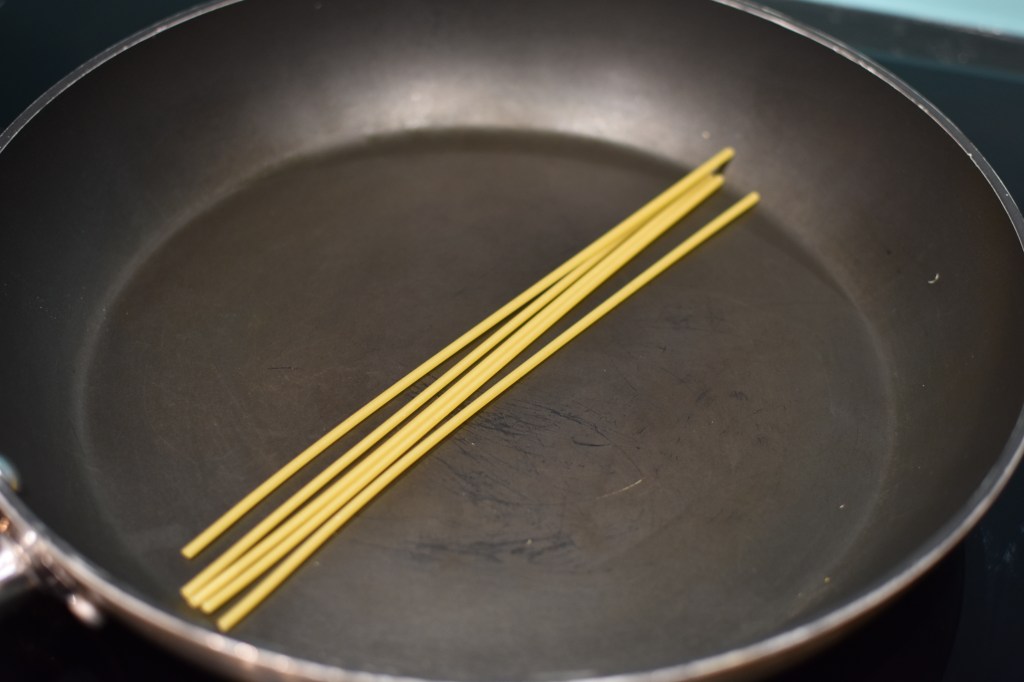
Method:
- Add about 3 cm of water to your “wide pan” and season with a good two pinches of salt. Place over a high heat.
- While you’re waiting for the water to boil, add the pepper corns to the small frying pan over a high heat. Dry roast for about a minute until aromatic, then transfer to a mortar and pestle.
- Roughly crush the peppercorns into a nice mixture of fine pepper with some larger pieces.
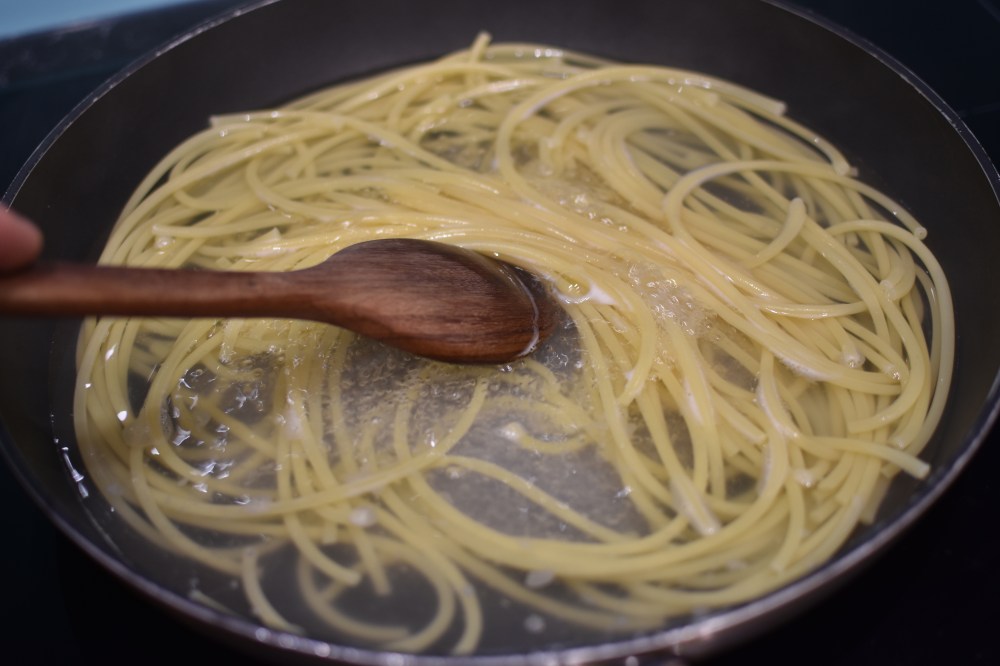
- By now, the water should be boiling. Add the pasta to the pan and cook until it’s “early” al dente – so still got quite a bite, but certainly palatable. Be sure to occasionally mix the pasta around a bit to prevent it from sticking
- Tilt the pan and remove approximately 1/3 cup of the concentrated pasta water and transfer to a bowl. Remove the pan with the pasta from the heat, but do not drain
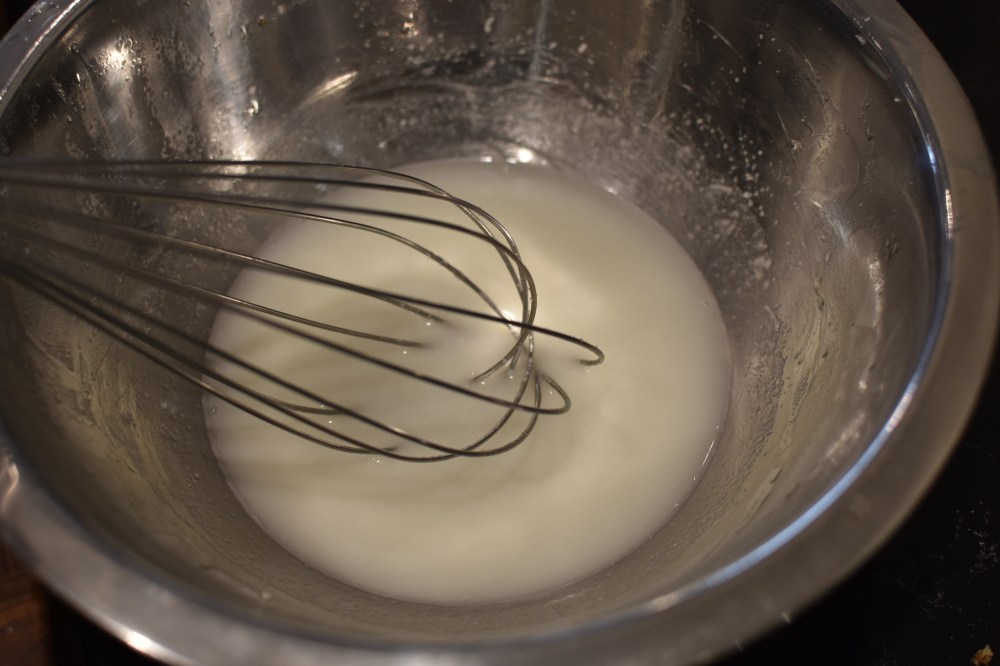
- Wait for 1 minute to allow the hot boiling water in the bowl to cool down a bit
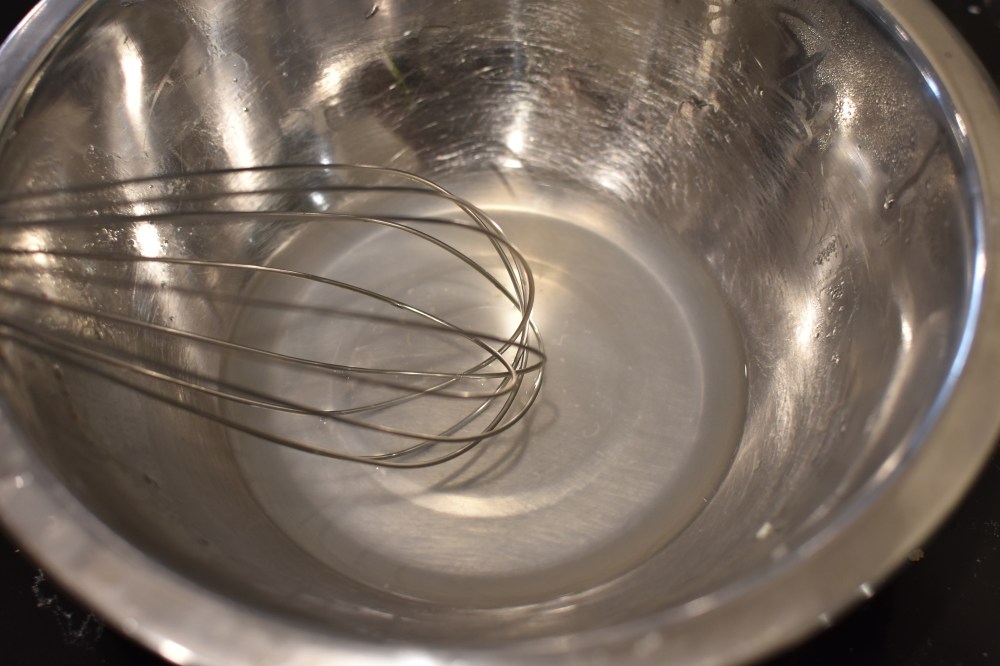
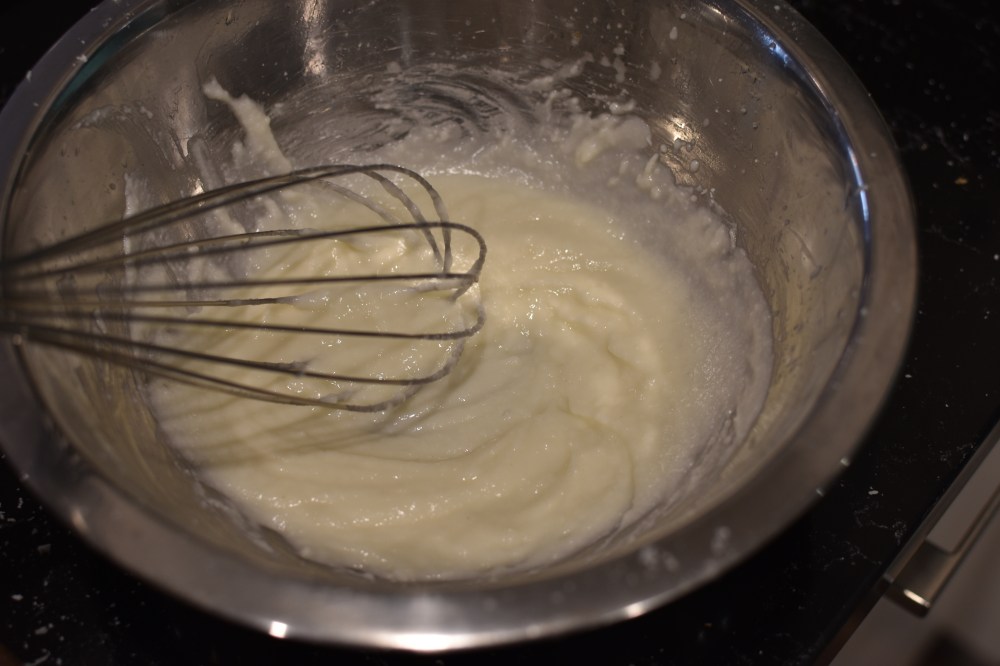
- Over the next minute gradually sprinkle the cheeses into to the water in the bowl whisking continuously to form a white “creamy” sauce. If it gets too thick, add a tablespoon or two of more pasta water to thin it out.
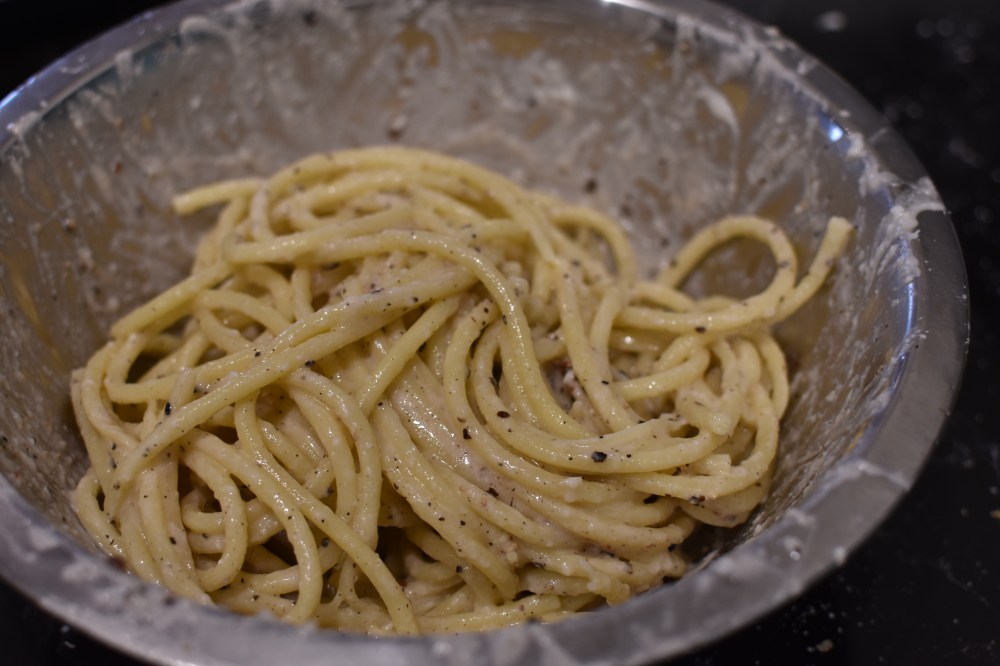
- Using tongs, add the warm pasta into the sauce gradually, tossing to combine while sprinkling in the pepper.
- Serve immediately over the warm plate with some extra fresh shavings of either cheese if desired. Enjoy.
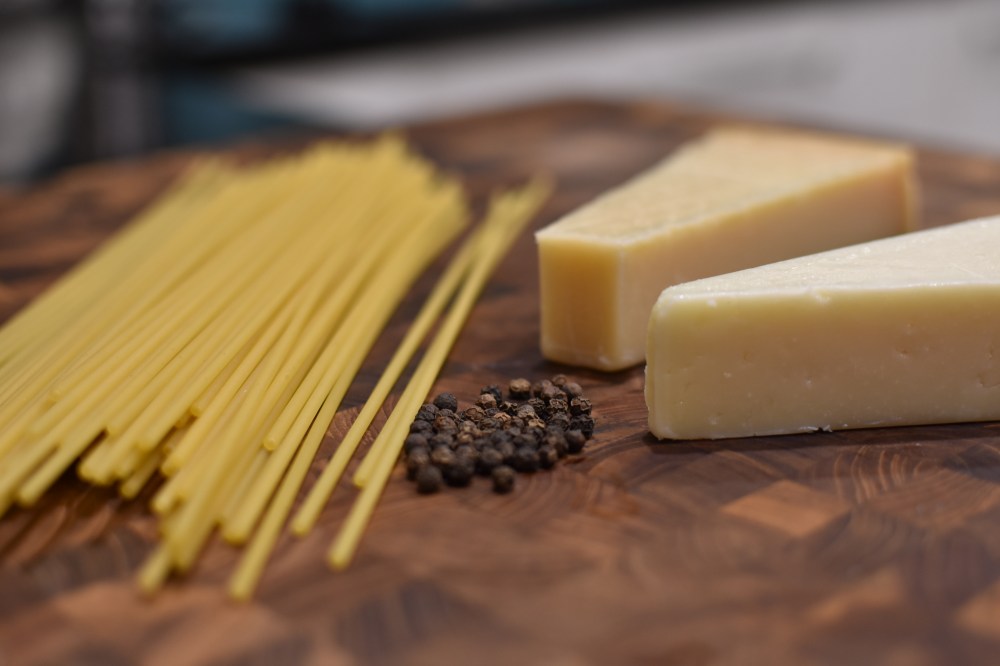
Basically all the ingredients you’ll need! 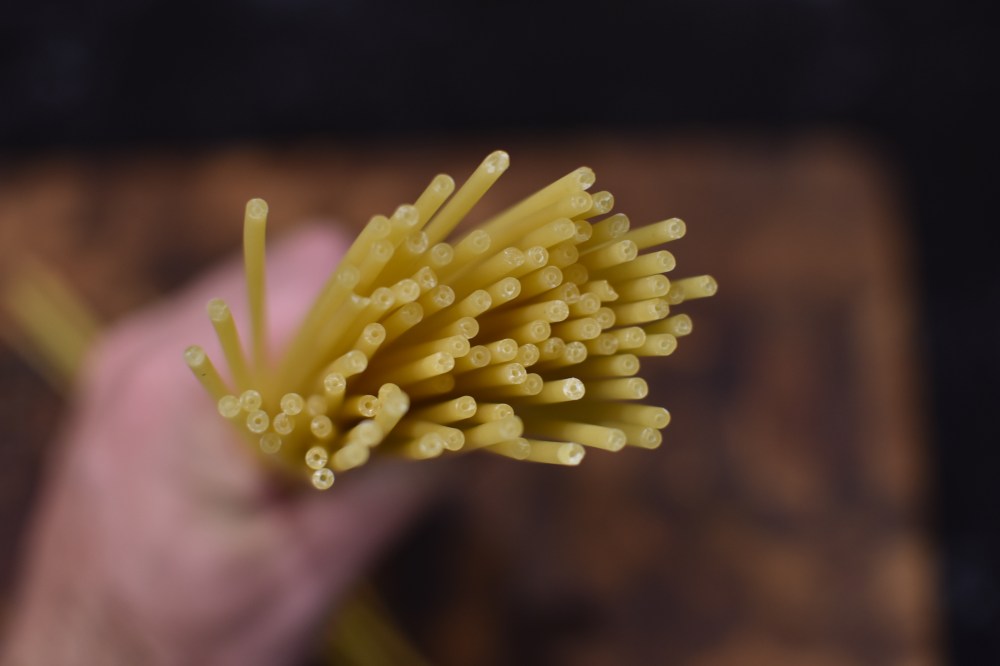
Bucatini are perfect for this dish! 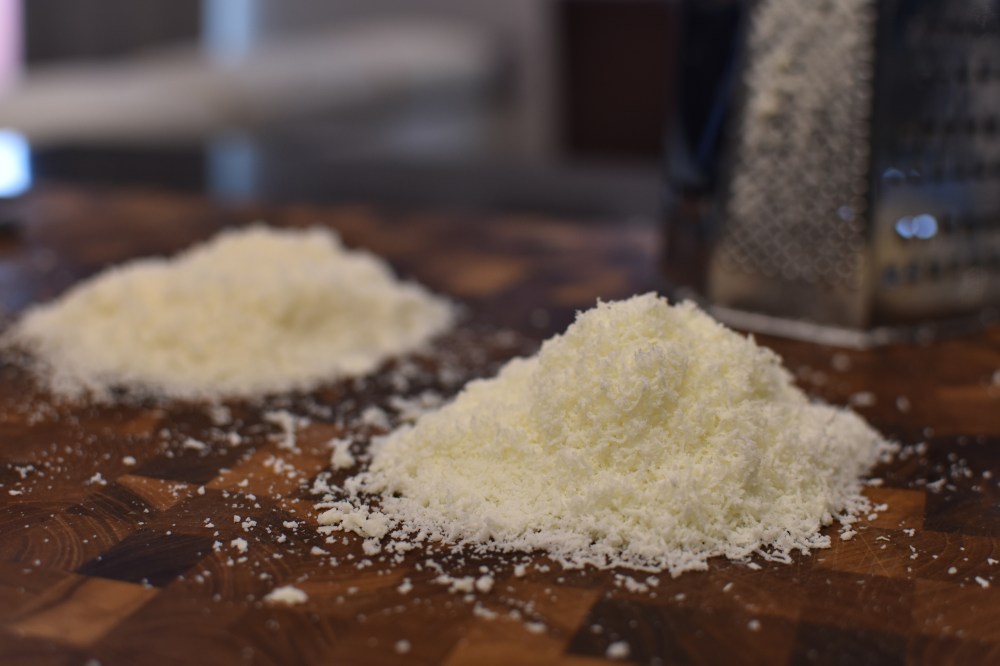
Finely grated cheese 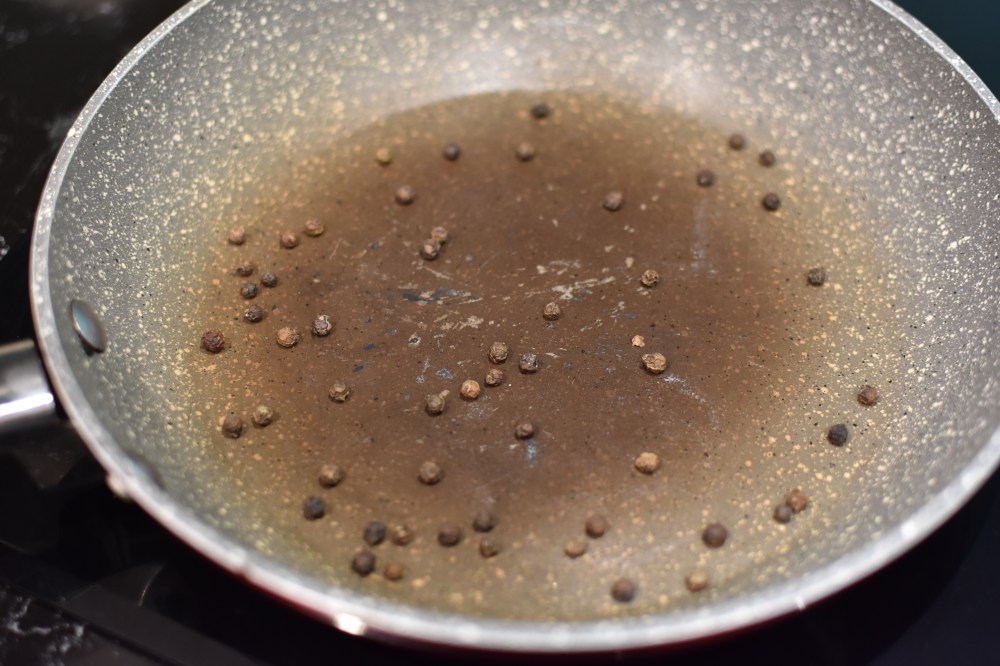
Dry roasting the pepper 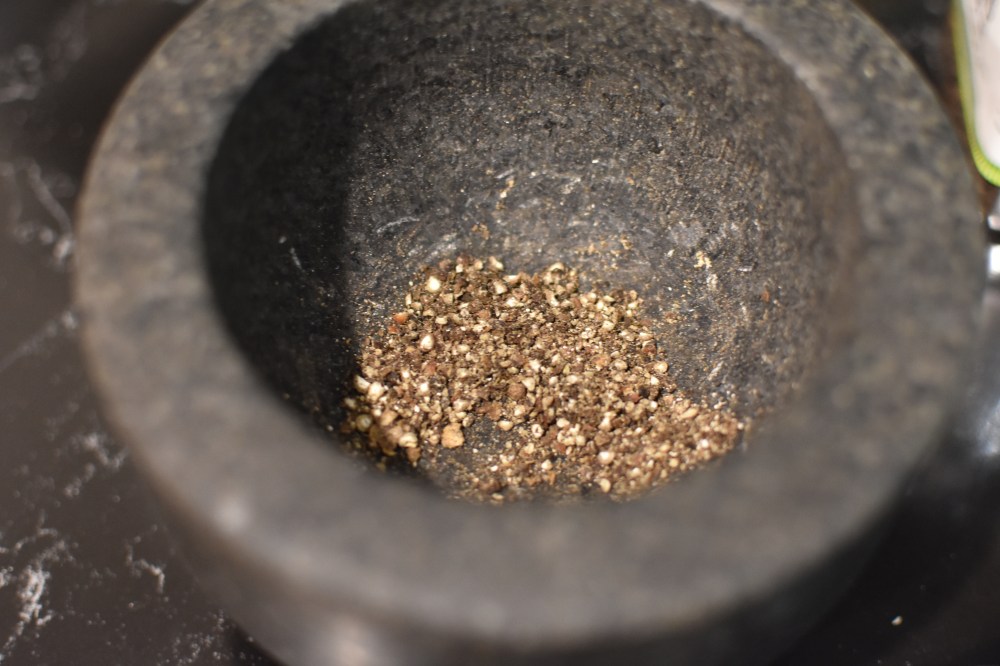
Roughly crushed pepper
Notes:
Here we achieve the “creamy” texture by emulsifying the fats (from the cheese) together with the starch in the pasta water. The more starch we have available, the easier this process becomes. This is the reason why I recommend cooking the pasta in such a small amount of water (and not how I would usually cook pasta). If you do not have a pan wide enough that fits your pasta, just cook in the largest pot you have with much less water than you would usually use. The water should be cloudy (as per pic below).
In this dish you want the pasta to be perfectly al dente – i.e. with a nice bite. Thus when it’s almost ready to be served, start making the sauce. By the time you’ve made the sauce, the pasta should should be just perfect. When cooking the pasta be sure to give it a good stir here and there to ensure equal cooking.
It is crucial to give the pasta water required for the sauce time to cool down a bit. This prevents it from melting the cheese too quickly (and explains why I recommend that you wait for 1 minute)
Add the cheese to the water gradually, whisking continuously. This prevents the formation of clumps and also helps the emulsification process. If the sauce gets too thick, you can always add more pasta water to thin it out, 1 tablespoon at a time.
Troubleshooting and solutions:
When cooking the pasta, the water is boiling away and some of the pasta isn’t covered in water. This is causing unequal cooking of my pasta!
If this happens, just add some extra boiling water from the kettle, just enough to ensure all the pasta is submerged. Next time use a bit more water in the beginning.
When mixing the cheese and the water I’m getting lumps of melted cheese instead of the white creamy sauce.
Either your cheese isn’t grated fine enough, or your pasta water is too hot. Next time try to avoid this by following the steps mentioned above. PS – it’ll still taste nice! Don’t worry!
I love pepper and I would like a bit more of a kick to my dish
Use 2 teaspoons of black peppercorns instead of 1-1.5 teaspoons.
No matter how hard I try, I cannot achieve the emulsification as instructed.
Comment below or contact me and I’ll try and help you out as best I can. While its not traditional at all, there is an option to use some butter with the pepper in the beginning. This butter can then be used to help the emulsification process even more by adding the melted butter and pepper to the cheese and water mixture.
I can’t stop cooking and eating this, it’s just too delicious!
Stop buying pasta or cheese when out shopping to remove temptation!
Disclaimer:
Dear all Italians and professional chefs, forgive me! I know this is not the traditional ratio of cheese. Or the correct method of making it. But I genuinely prefer it with the relatively higher parmigiano content. And this method is relatively “foolproof” and not so dependant on experience.
 Food by Zac